The Churchill Casebook of Curiosities
Book Four: The Mysterious Case of the Severed Hand
Interlude: Sanjeev, A Life
The size of the hole it made in the other manUnderstairs (Extract)
The Premiere Journal for Service Industry News, Placements, and Gossip
SANJEEV PRADHAN: A LIFE OF SERVICE
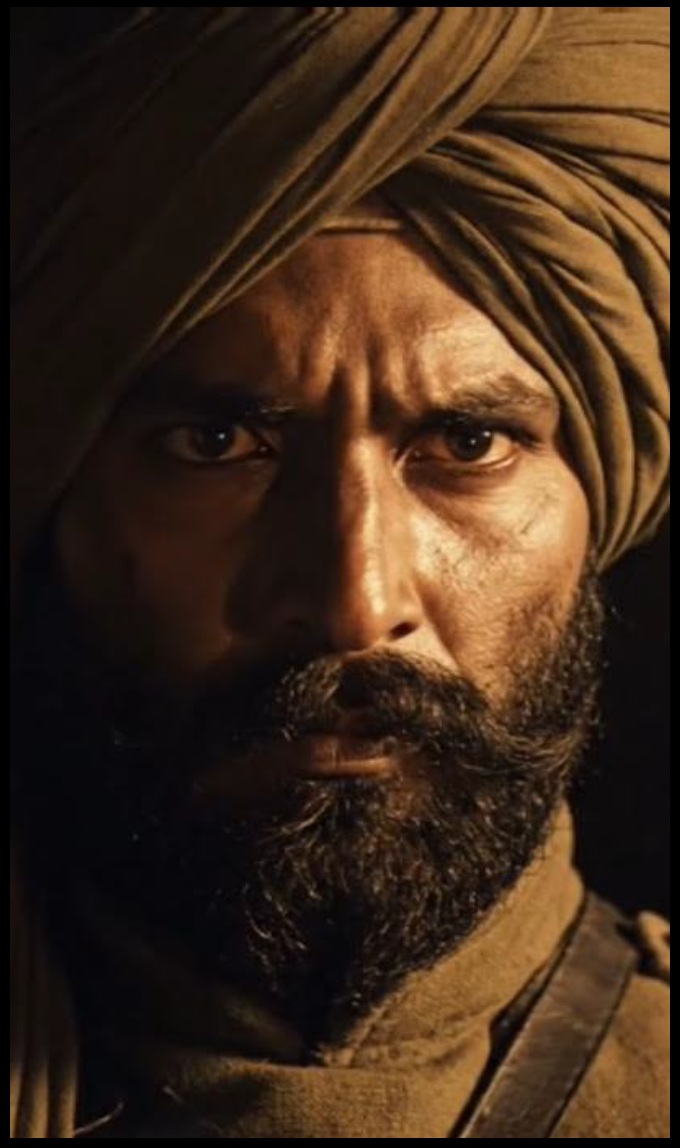
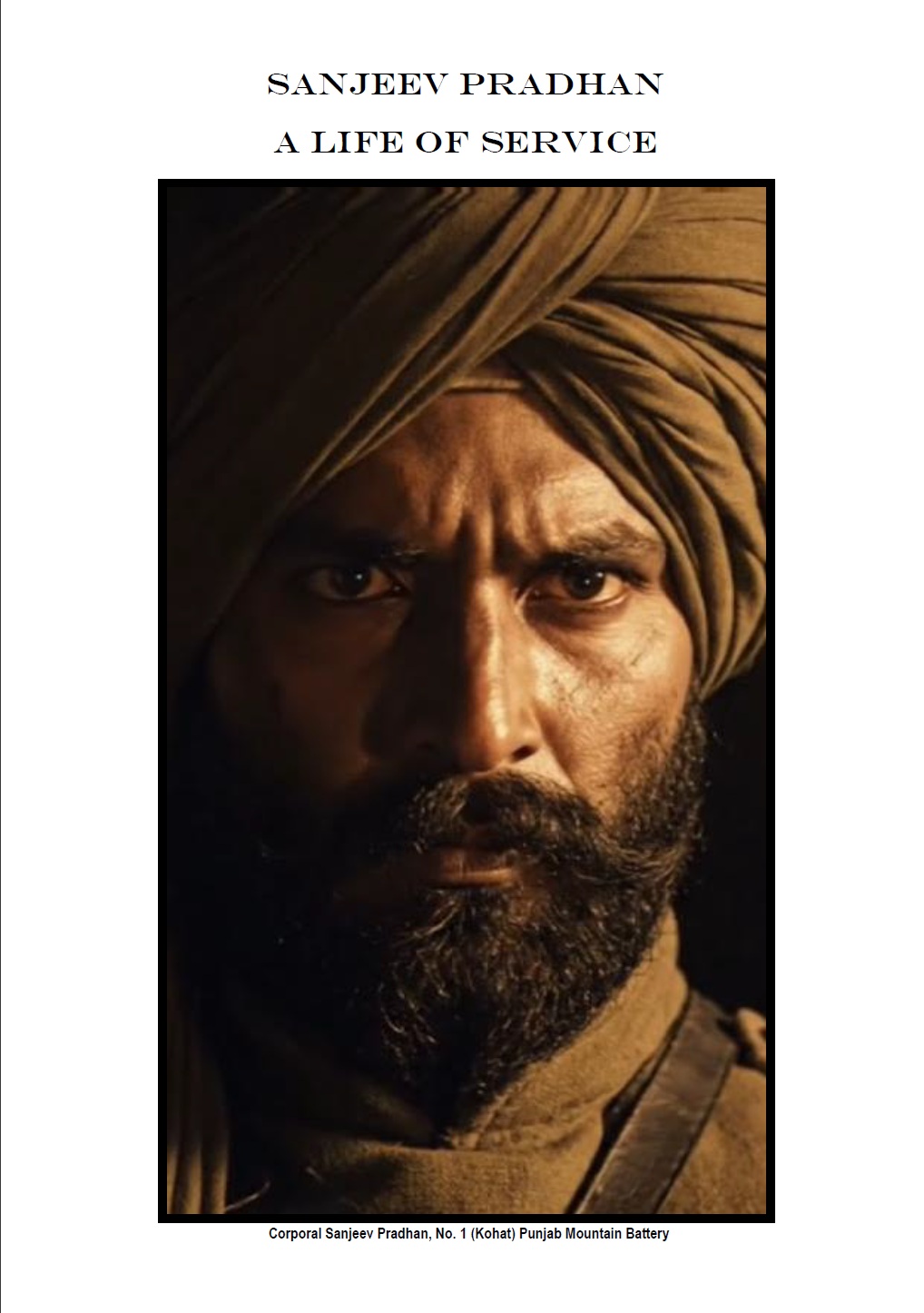
Corporal Sanjeev Pradhan, No. 1 (Kohat) Punjab Mountain Battery
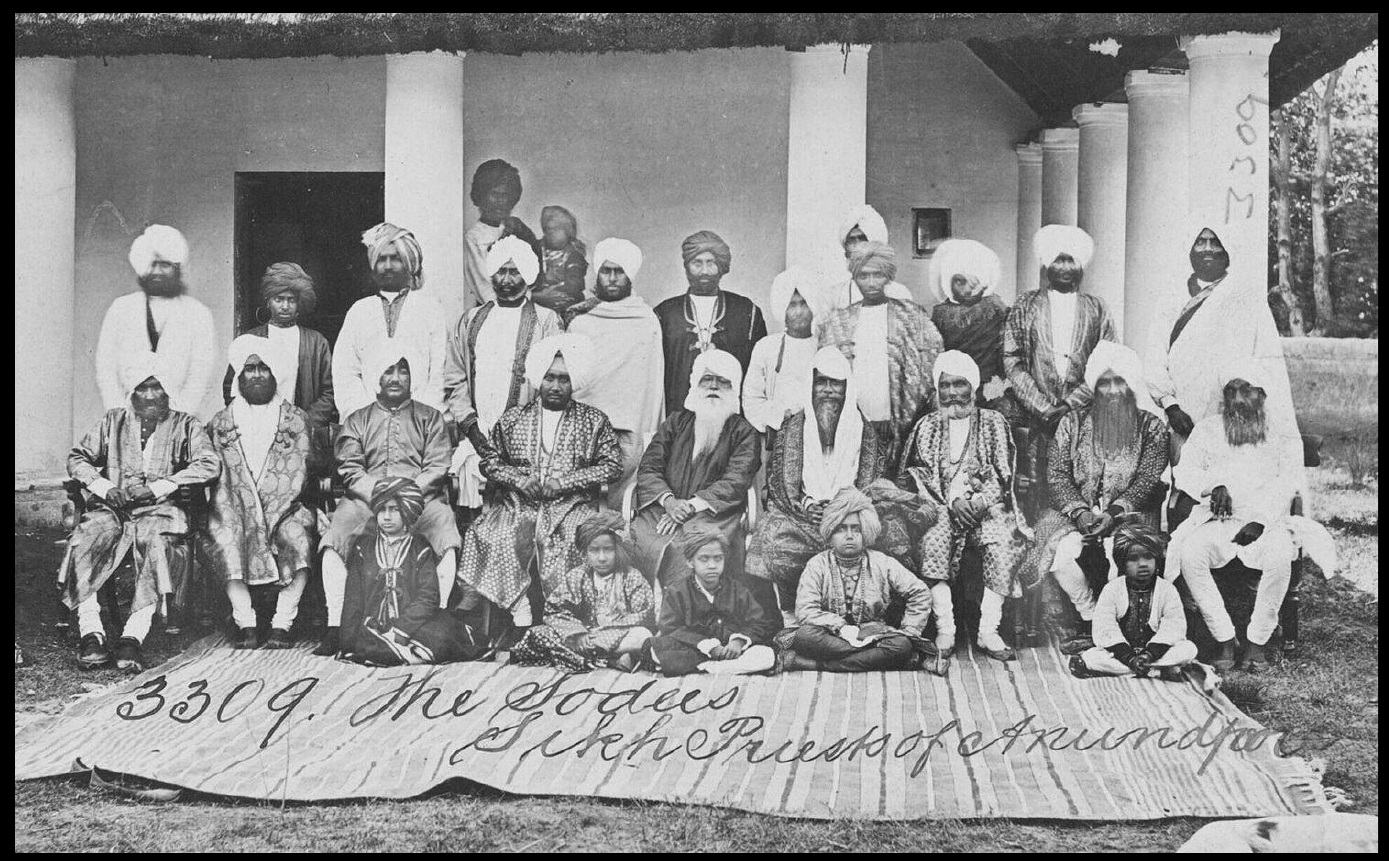
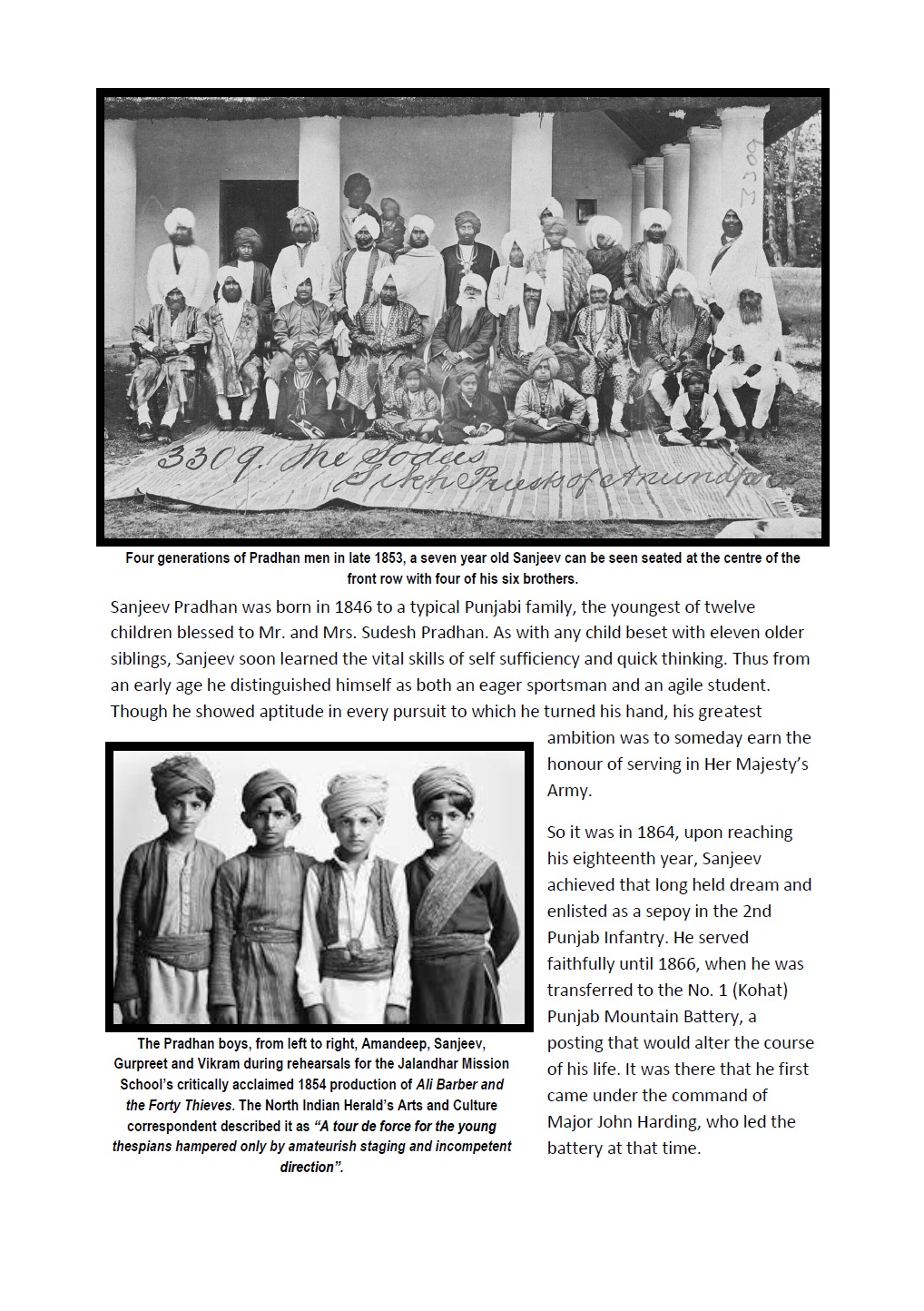
Four generations of Pradhan men in late 1853, a seven year old Sanjeev can be seen seated at the centre of the front row with four of his six brothers.
Sanjeev Pradhan was born in 1846 to a typical Punjabi family, the youngest of twelve children blessed to Mr. and Mrs. Sudesh Pradhan. As with any child beset with eleven older siblings, Sanjeev soon learned the vital skills of self sufficiency and quick thinking. Thus from an early age he distinguished himself as both an eager sportsman and an agile student. Though he showed aptitude in every pursuit to which he turned his hand, his greatest ambition was to someday earn the honour of serving in Her Majesty’s Army.
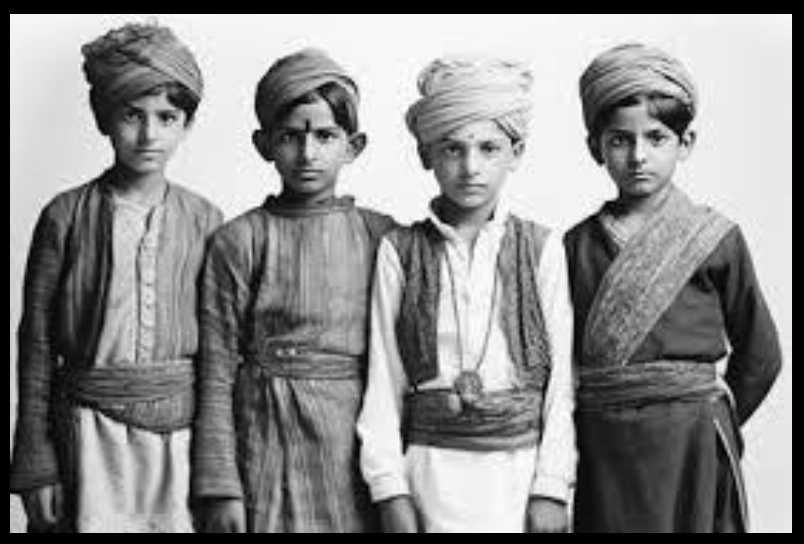
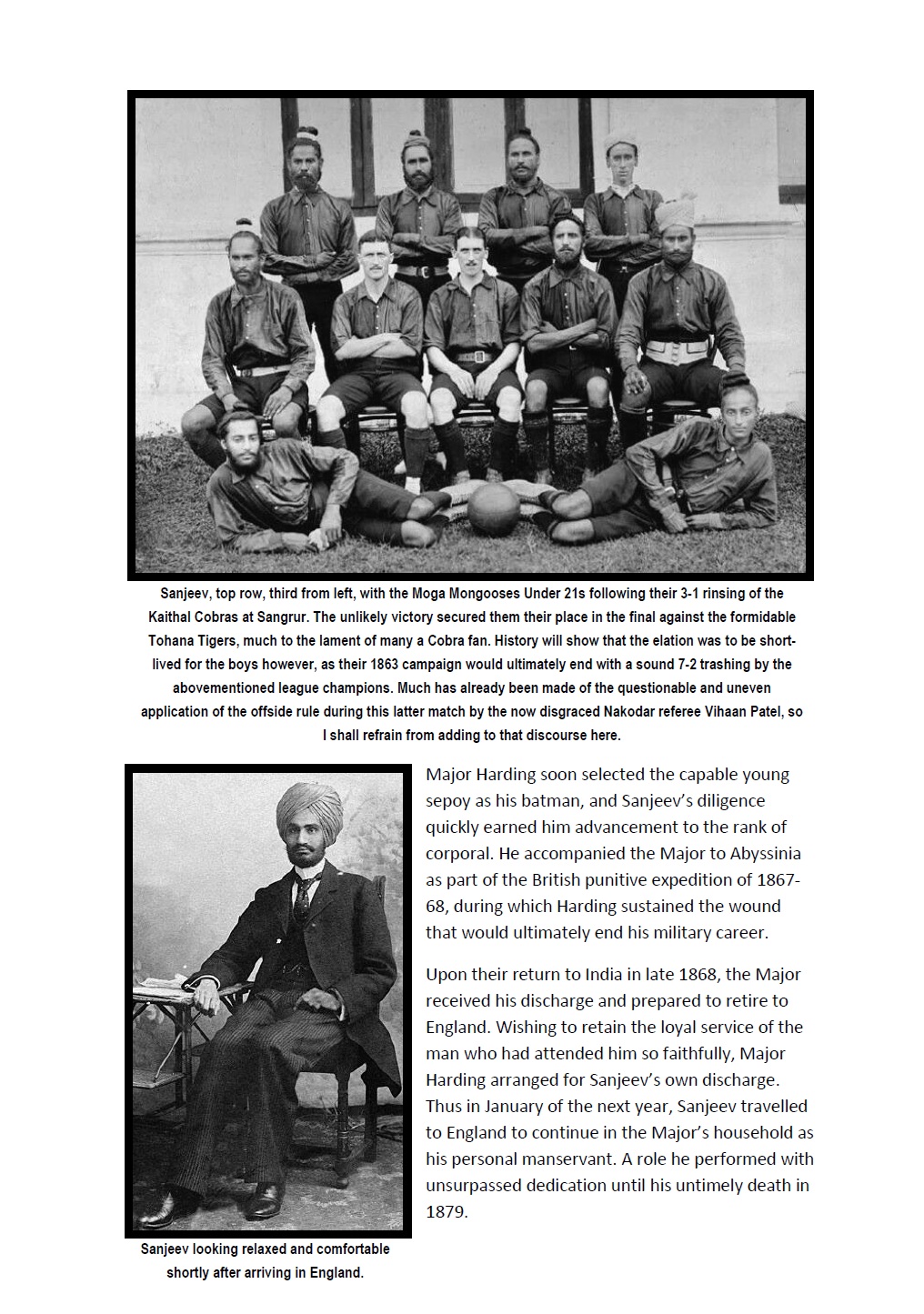
The Pradhan boys, from left to right, Amandeep, Sanjeev, Gurpreet and Vikram during rehearsals for the Jalandhar Mission School’s critically acclaimed 1854 production of ‘Ali Barber and the Forty Thieves’. The North Indian Herald’s Arts and Culture correspondent described it as ‘A tour de force for the young thespians hampered only by amateurish staging and incompetent direction.'
So it was in 1864, upon reaching his eighteenth year, Sanjeev achieved that long held dream and enlisted as a sepoy in the 2nd Punjab Infantry. He served faithfully until 1866, when he was transferred to the No. 1 (Kohat) Punjab Mountain Battery, a posting that would alter the course of his life. It was there that he first came under the command of Major John Harding, who led the battery at that time.
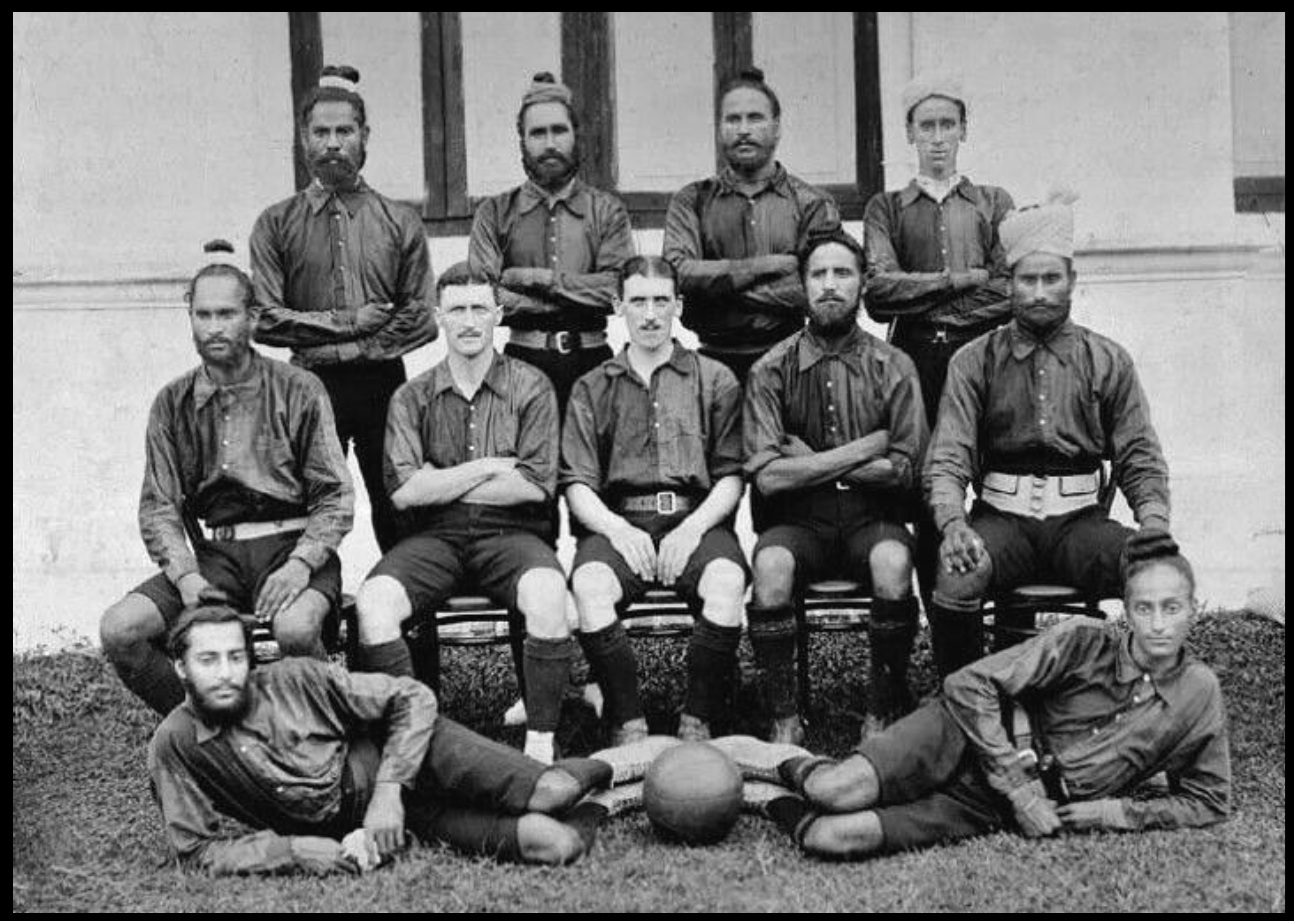
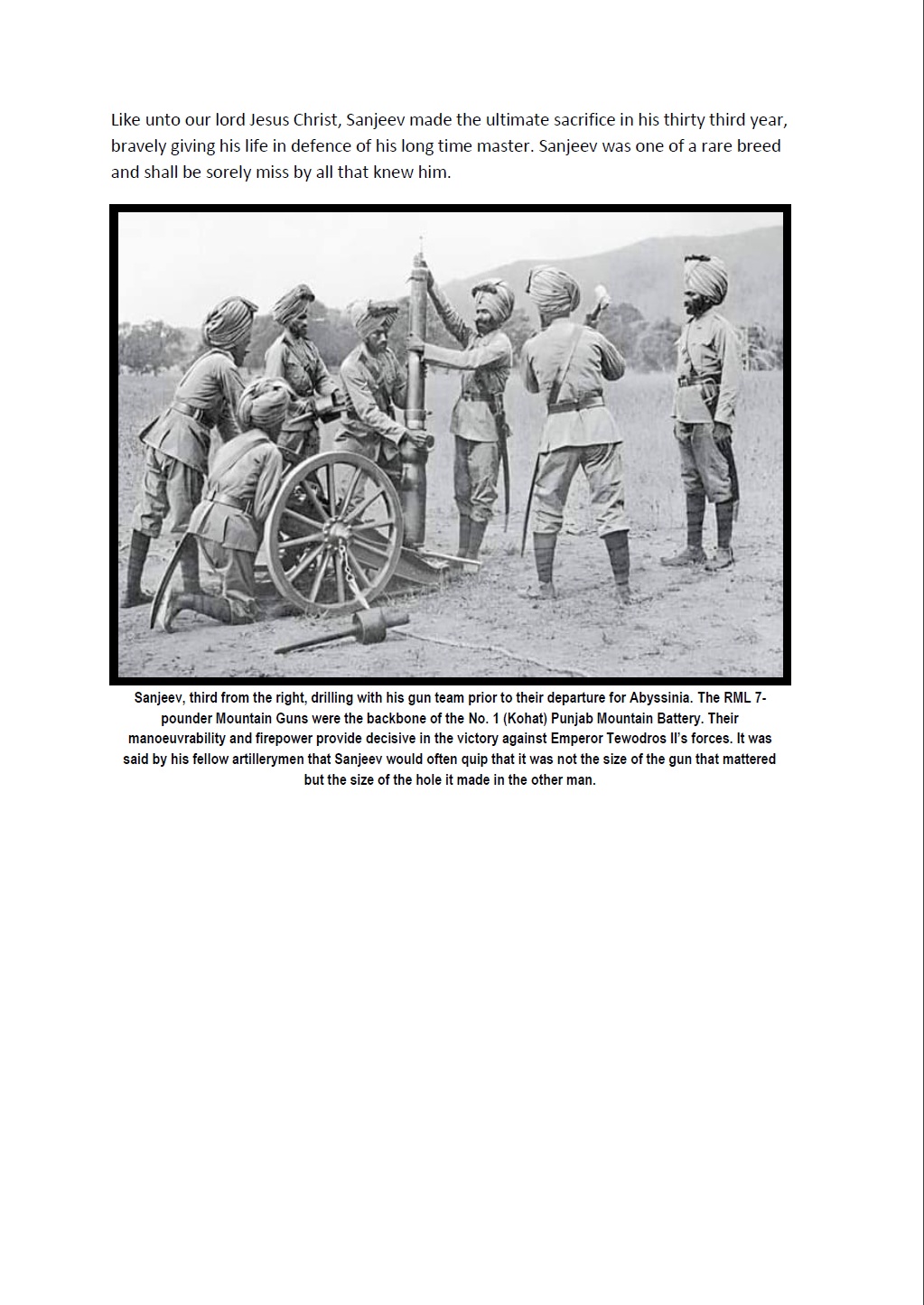
Sanjeev, top row, third from left, with the Moga Mongooses Under 21s following their 3-1 rinsing of the Kaithal Cobras at Sangrur. The unlikely victory secured them their place in the final against the formidable Tohana Tigers, much to the lament of many a Cobra fan. History will show that the elation was to be short-lived for the boys however, as their 1863 campaign would ultimately end with a sound 7-2 trashing by the abovementioned league champions. Much has already been made of the questionable and uneven application of the offside rule during this latter match by the now disgraced Nakodar referee Vihaan Patel, so I shall refrain from adding to that discourse here.
Major Harding soon selected the capable young sepoy as his batman, and Sanjeev s diligence quickly earned him advancement to the rank of corporal. He accompanied the Major to Abyssinia as part of the British punitive expedition of 1867-68, during which Harding sustained the wound that would ultimately end his military career.
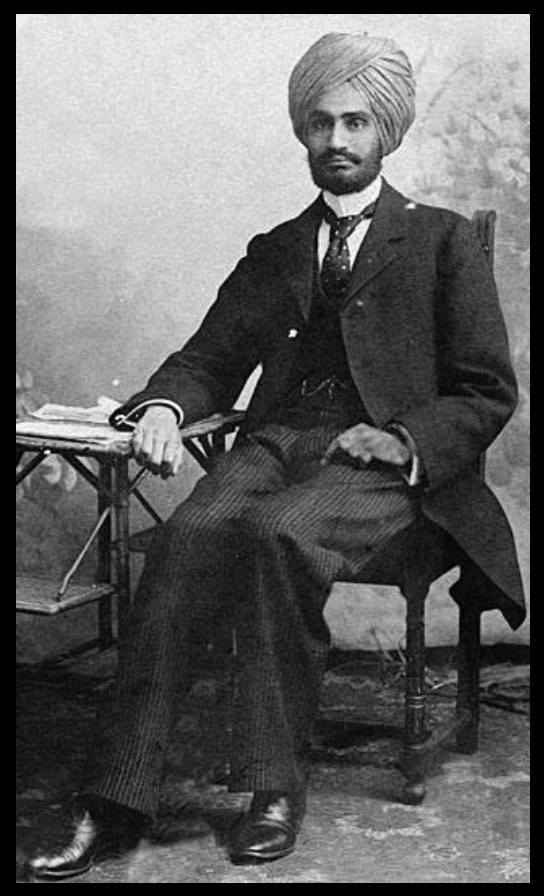
Sanjeev looking relaxed and comfortable shortly after arriving in England.
Upon their return to India in late 1868, the Major received his discharge and prepared to retire to England. Wishing to retain the loyal service of the man who had attended him so faithfully, Major Harding arranged for Sanjeev’s own discharge. Thus in January of the next year, Sanjeev travelled to England to continue in the Major’s household as his personal manservant. A role he performed with unsurpassed dedication until his untimely death in 1879.
Like unto our lord Jesus Christ, Sanjeev made the ultimate sacrifice in his thirty third year, bravely giving his life in defence of his long time master. Sanjeev was one of a rare breed and shall be sorely miss by all that knew him.
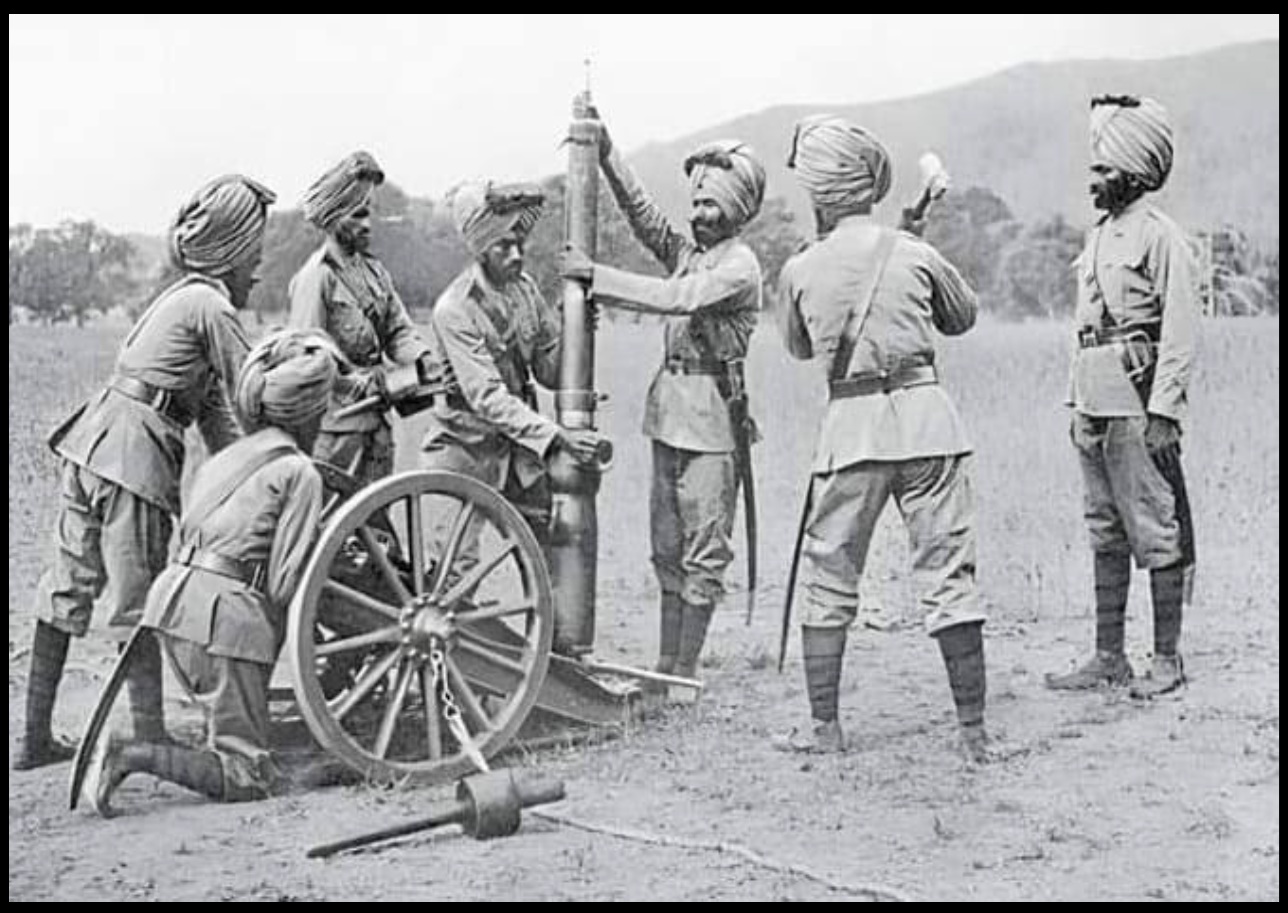
Sanjeev, third from the right, drilling with his gun team prior to their departure for Abyssinia. The RML 7-pounder Mountain Guns were the backbone of the No. 1 (Kohat) Punjab Mountain Battery. Their manoeuvrability and firepower provide decisive in the victory against Emperor Tewodros Il’s forces. It was said by his fellow artillerymen that Sanjeev would often quip that it was not the size of the gun that mattered but the size of the hole it made in the other man.